I of course refer to elegance in a wargaming sense, as I have little of it personally. I was recently reading a post on the excellent Steven’s Balagan blog about the Horse-and-Musket era rules, Volley and Bayonet. The post discusses the merits of V&B, not to be confused with a well-known Australian beer in a green can (which I certainly would not describe as elegant).
If you can play a set of rules about half a dozen times and then have another game of them without even taking the rules off your shelf, then that means they are probably elegant (or ridiculously simplistic). If the rules are smooth and intuitive, and have a few basic concepts that can be easily memorised after a few goes, so you can play a decent sized game that is exciting and challenging, without even needing to look at the rule book, then they are elegant. V&B is one of only three sets of rules that I know that deserve to be called elegant, the others are Crossfire and early DBA/DBM.
I am not well-placed to discuss either Volley and Bayonet or Crossfore, but I have played a large amount of DBA 3.0 (and some of its cousins) and agree that it is elegant.
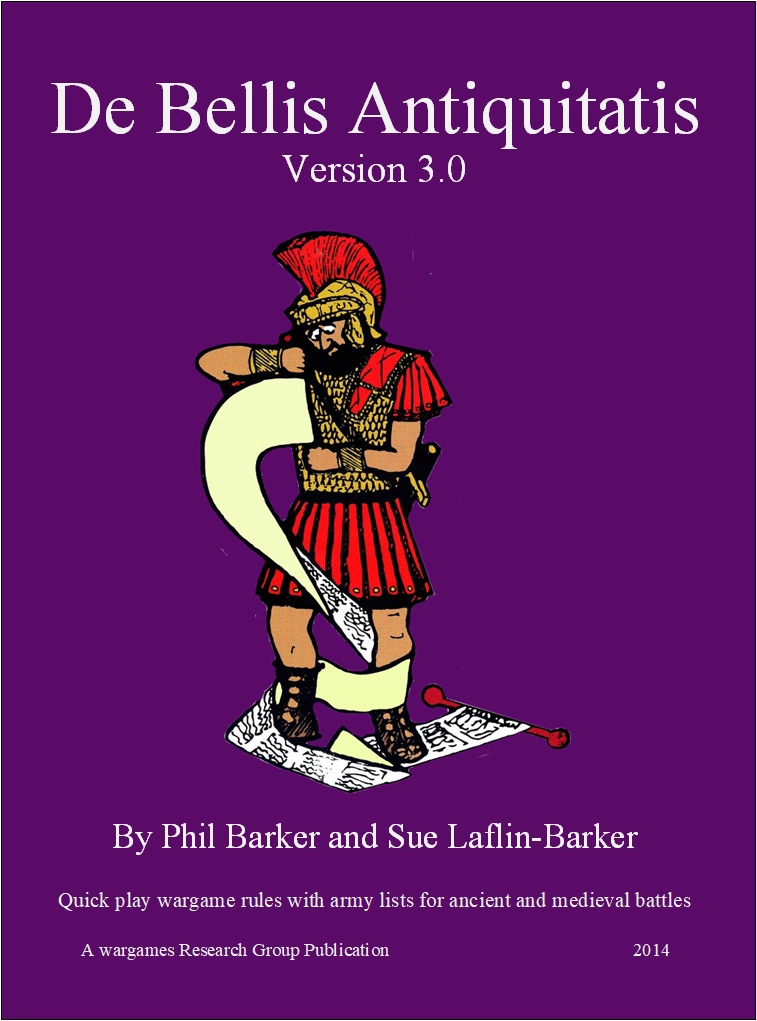
I believe that an elegant game system uses as few rules as possible to obtain a result that feels ‘truthy’. If you can end at a fairly historical result most of the time by using historical tactics with few dice rolls and moments of checking statistics, profiles and exceptions, then you’re being elegant. An elegant game reduces the rules overhead that a player has to remember, and uses fewer mechanics to encourage rational decisions to arrive at a plausible outcome. It allows players to focus on making the right decisions rather than on applying the right rules.
This is not to say that elegance is the same as simplicity; as the archetypal example, chess is extremely elegant and allows players to focus on making tough choices. Indeed, the simplest wargame would be flipping a coin to determine who won, but it would not take generalship on the level of Cannae to do so.
Of course, a wargame is more than just its base rules; a number of systems have elegant mechanics but then add complexity in army design and unit-specific rules. This type of complexity adds more mental load to gamers as there are many variable pieces of information to keep at front of mind. Most Games Workshop games absolutely fit into this high-complexity category, with varying levels of elegance.
The complex/elegant plane
To me, there are two types of mental load in-game: rules overhead and situational complexity. Rules overhead is the mental load from remembering how the core game rules work and will be the same in most games in a particular system. The situational overhead can change with factions/nationalities, list construction, scenario rules, and tournament packs. I find this situational overhead quite overwhelming as it can change every time you play a pickup game. An elegant game minimises the rules overhead by making complex concepts easy to resolve in game terms, which can make the situational complexity easier to manage.
GW’s Age of Sigmar has a very short core rules document and units have very few stats; however, the addition of scenario rules, competitive seasonal rules, army rules, detachment rules and unit rules rapidly turns the game into a quagmire of background knowledge. This puts AoS at moderately elegant, but very high on the situational complexity axis, as there is lots to retain and plenty of edge cases and interactions to watch for.
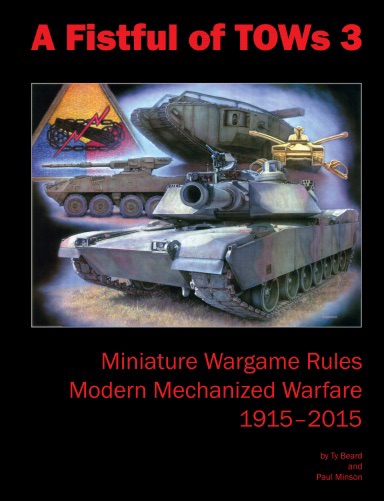
As a point of reference, I would also call Fistful of ToWs 3 complex but far more elegant. There are different types of armour, weapon systems, and even rules for bringing new systems into the game that haven’t been covered by the army lists. It can cover artillery, aircraft, tanks and entrenched infantry platoons operating in the same space. However, this complexity is far more palatable as the game is extremely elegant. Many mechanics are tied to troop quality, meaning that once you have the weapon ranges and the interactions with the vehicles under control, the game itself flows smoothly and encourages realistic tactical play. High-quality troops fight better and stick around longer.
I will mention another elegant game, that I suspect Steven of the eponymous balagan would not mention out of humility: the Twilight of the … series. These musket-era rules avoid having a shooting phase, and instead fold it directly into morale. When a unit represents hundreds or thousands of individuals, the casualties were not considered the important outcome, but rather the impact on the morale of the unit. Elegant.
Positioning a game at the correct area of the complex-elegant plane allows it to hit the right style for the designer and the audience.
Finding the right balance
Elegant games are often associated with quick play or with being able to use a larger number of units in game — or both!
Sometimes detail is the point; Battletech is the perfect example of this. Players want the crunch of piloting a complex machine and the game gives them an accountancy simulator with lasers.
I like conflicts that feel huge in scale, representing the difficult decisions of a high-ranking officer commanding large formations. I don’t need to know if every soldier had a helmet or a cap, or if they were standing two lines deep or three. I want the speed and high-level decisions of large-scale command most of the time.
Sometimes elegance stretches credulity or glosses over the one-in-a-million, but quick play that feels crunchy and believable is generally what I’m after.
Sometimes I want depth and detail, but often I want to squeeze in a game or three on a club day and feel mentally taxed by tough choices, not mentally taxed by trying to remember six different layers of changing rules.
There are so many wargames to play in my finite time on this mortal coil, so having a mental schema for the type of games I want to play is helpful to me, even if not to everyone.
Cheers
The indecisive Wargamer


Leave a Reply